
Tankless Water Heater Service for Burbank Homes
Burbank's tap water measured 286 ppm hardness on average in 2025, or 16.7 grains per gallon, as reported in the utility's annual water report. A tankless water heater heats water as it passes through a narrow heat exchanger, and minerals at that level build up there faster than most owners expect. Error codes, lukewarm water and a unit that cycles on and off are often scale showing up. This page covers repairing, descaling, installing and converting to tankless in a Burbank home.
Call (818) 280-4874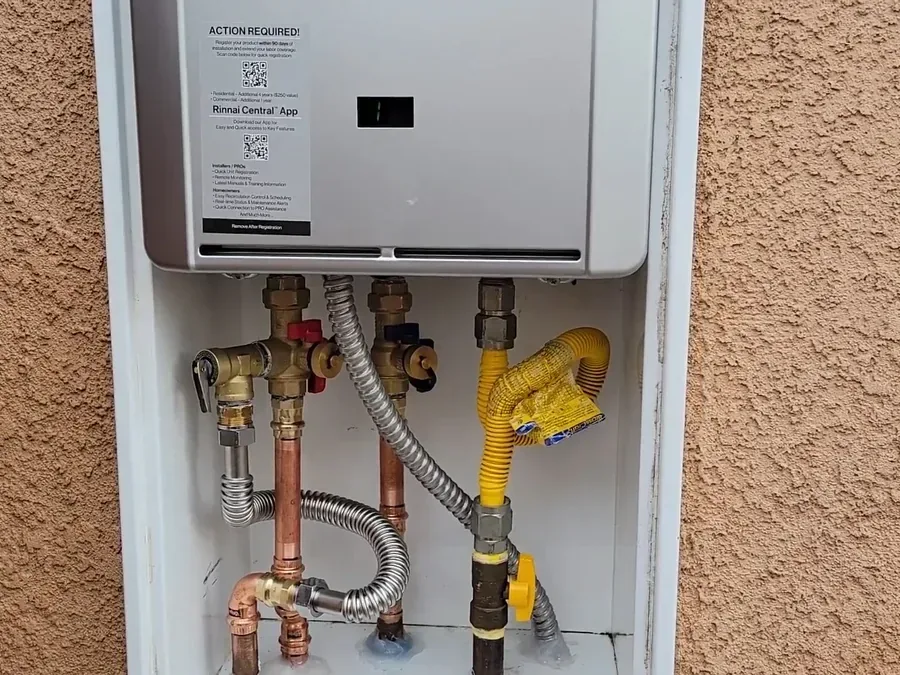
Tankless water heater repair and troubleshooting
Start with what the unit shows. Most tankless heaters display an error code, and the code narrows the problem to ignition, flame sensing, water flow, venting or temperature. Manufacturers publish the code lists, and a plumber reads the code before opening the unit.
| What you notice | Usual cause | What a plumber checks |
|---|---|---|
| Water turns lukewarm or cold mid-shower | Scale on the heat exchanger or a flow too low to trigger the burner | Flow sensor, inlet filter and heat exchanger condition |
| Error code and no heat | Ignition or flame-sensing fault, or a vent restriction | Gas supply, igniter, flame rod and vent |
| Water runs hot, then cold, then hot | Cold water arriving through a cross connection, or a flow that is just under the minimum | Valves, fixture mixers and recirculation lines |
| Rumbling or kettle sounds | Scale breaking up in the heat exchanger | Descaling and water treatment |
| No power to the display | Tripped breaker or a failed control board | Power supply and board fuse |
Gas and electric tankless units fail in different places, so the plumber confirms the fuel and model before diagnosing. A tank-style unit that needs repair has its own page, water heater repair.
Tankless water heater installation: what the house has to provide
A tankless unit moves a lot of fuel or power in a short time, and that is where installation gets more involved than a tank swap. A gas unit often needs a larger gas line, since the burner can draw several times what a tank burner uses. It needs a vent rated for the unit and a condensate drain if it is a condensing model. An electric unit can need several heavy circuits and more panel capacity than a house has.
Brands differ in venting, minimum flow and service access, so the choice is partly about who can service the unit in your area later. Ask the plumber which brands they install and repair, and whether parts are stocked.
Flush, descale and maintenance: the hard water routine for a tankless heater
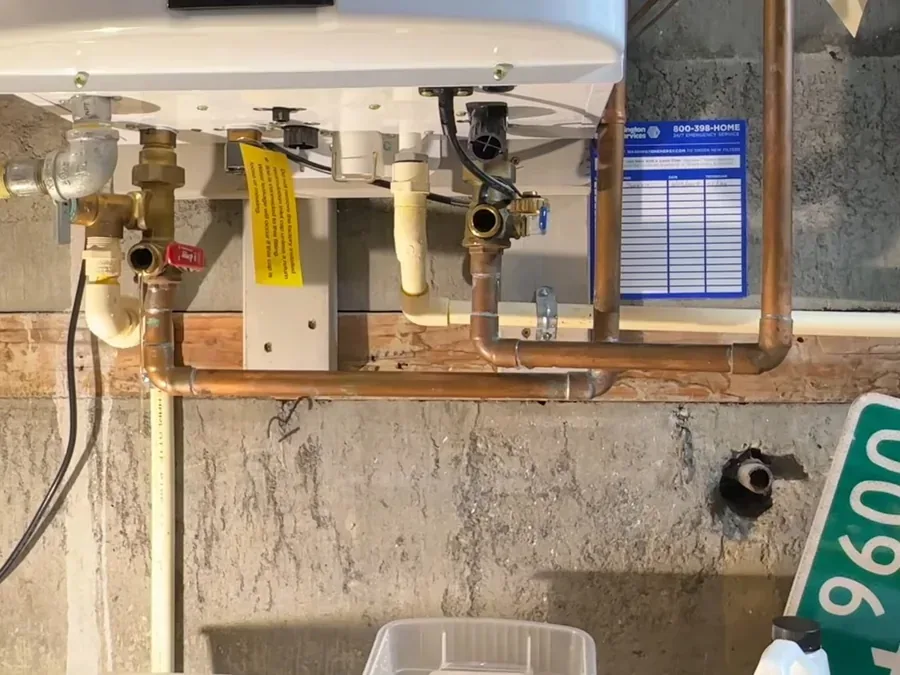
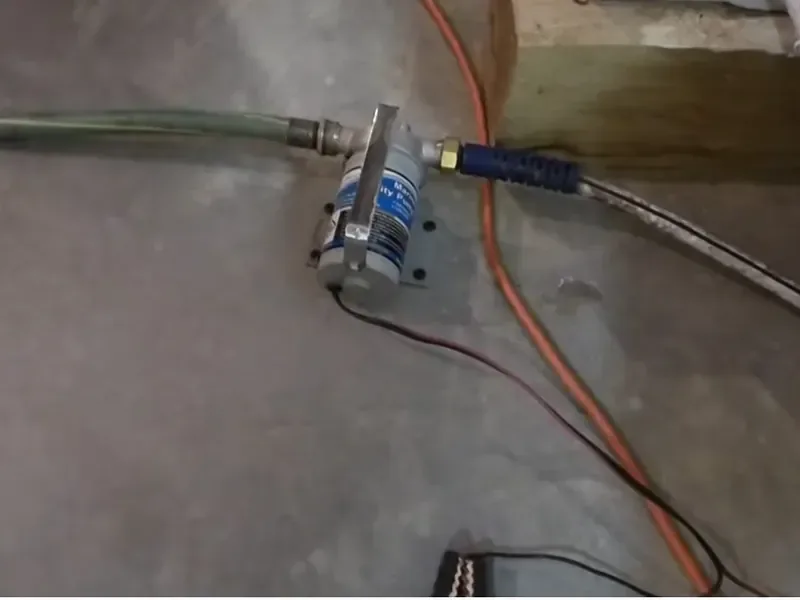
Flushing a tankless unit means circulating a descaling solution, usually white vinegar or a manufacturer-approved product, through the heat exchanger with a small pump, then flushing it clear. Many manufacturers call for annual service in hard water, and the unit may need it sooner when the water is as hard as Burbank's report shows.
Isolation valves make flushing practical. A unit installed without them needs them added before it can be serviced properly. Ask whether the installation includes service valves. Treating the incoming water is covered on the water softener page.
Is tankless worth the conversion for this house?
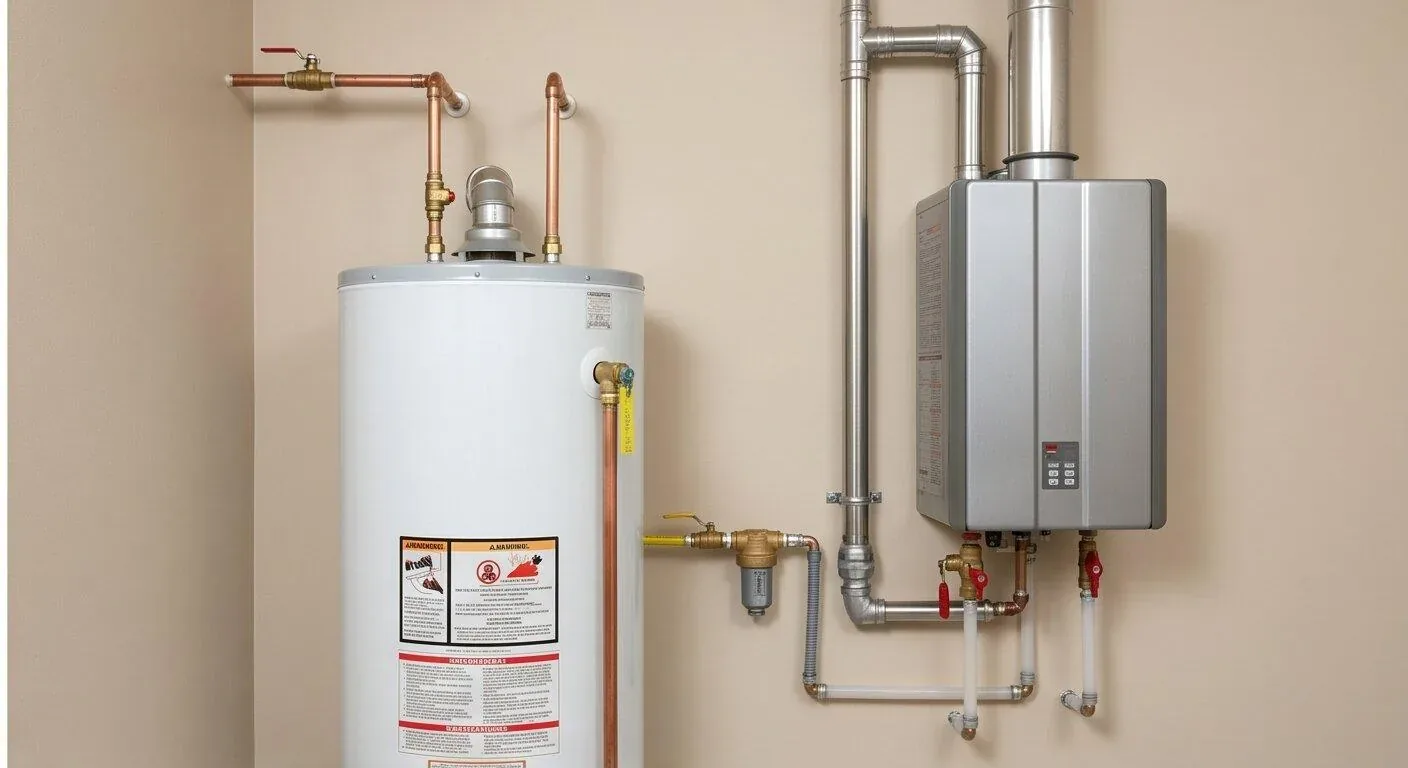
Tankless vs tank is a trade of space and fuel for stored volume. Tankless units provide hot water as long as the flow is there, take less floor space and have no tank to rust through. They cost more to install than a like-for-like tank and ask more of the gas or electrical supply. A household that runs several showers at once will want a higher capacity, and a tank may suit a small household better.
Replacement and conversion are the same job with different amounts of added work. Replacing a tankless unit with another one of the same type is simple. Converting a tank to tankless involves the gas line, the vent, the wall space, the electrical service for the control board and often the removal of the old flue. Ask for the conversion items on the quote as separate lines.
Gas line capacity, venting and electrical: what the plumber must check
- The size and length of the existing gas line, and whether it can feed the unit at full firing rate
- The vent path, material and length, and the clearance to windows and openings
- Condensate drain location for a condensing unit
- The electrical supply for the controls, or the circuits for an electric unit
- Water pressure and flow at the meter, since the unit needs a minimum to fire
- Access for servicing, including space around the unit and isolation valves
A plumber should check these before quoting, not discover them on the day.
Permit and bracing questions
A tankless unit is a water heater for permit and code purposes, and the same rules apply to it.
Repair or replace an older tankless unit
Tankless heaters often outlast tank units, but they are not permanent. A heat exchanger that has been scaled for years can crack or lose efficiency. A control board can fail. The decision follows the same logic as a tank: the age, the failing part and the repeat history. A flow sensor or igniter on a unit that is otherwise clean is an easy repair. A cracked heat exchanger on an old unit is often a replacement.
Ask for the diagnosis in writing, with the part that failed, and ask whether descaling would have prevented it. That answer tells you whether the next unit needs a softener or a service schedule to last.
Tankless details that come up
Gas or electric tankless: which is better?
Gas units handle larger flow and are common in houses with a gas supply. Electric units are simpler to vent but need heavy circuits. The house's existing utilities usually decide it.
Do tankless heaters give endless hot water?
They heat on demand without a tank to run out, but each unit has a maximum flow. Open too many fixtures at once and the temperature drops.
How does tankless compare with a tank?
A tank stores heated water and can run out. A tankless unit heats as needed and takes less space. The water heater installation page compares the types.
Tankless heater questions from Burbank owners
How do I flush or descale a tankless water heater?
A pump circulates a descaling solution through the heat exchanger, then clean water flushes it out. Isolation valves make this possible. Many owners hire a plumber for it.
What does tankless installation involve?
Gas line and vent checks, electrical work for the controls, a condensate drain for condensing units, a permit and bracing. Each is a line item on a good quote.
Tankless or tank for a Burbank house?
It depends on how many people use hot water at once and what the gas line and vent can support. Hard water favors a plan for descaling either way.
What happens if I never descale my tankless heater?
Scale builds up in the heat exchanger, flow drops, the unit overheats and errors appear. Eventually the exchanger can fail. Descaling is the better habit.
Other services for a tankless setup
Tankless unit showing an error?
Read the code to the dispatcher if you can, and the call goes to a plumber who works on tankless units.
Call (818) 280-4874