
Emergency Repiping and Burst Pipe Repair in Burbank
Pipe replacement is for the house where leaks keep coming back: a pinhole in a copper line this year, another in the wall next year, rust-colored water at the tap, pressure that fades. Repiping replaces the supply lines through the house so the next leak is not just a matter of time, and a burst pipe is the version of the same problem that cannot wait. This page covers how to decide between repair and repipe, what the pipe is made of, what the work involves and what the City expects.
Call (818) 280-4874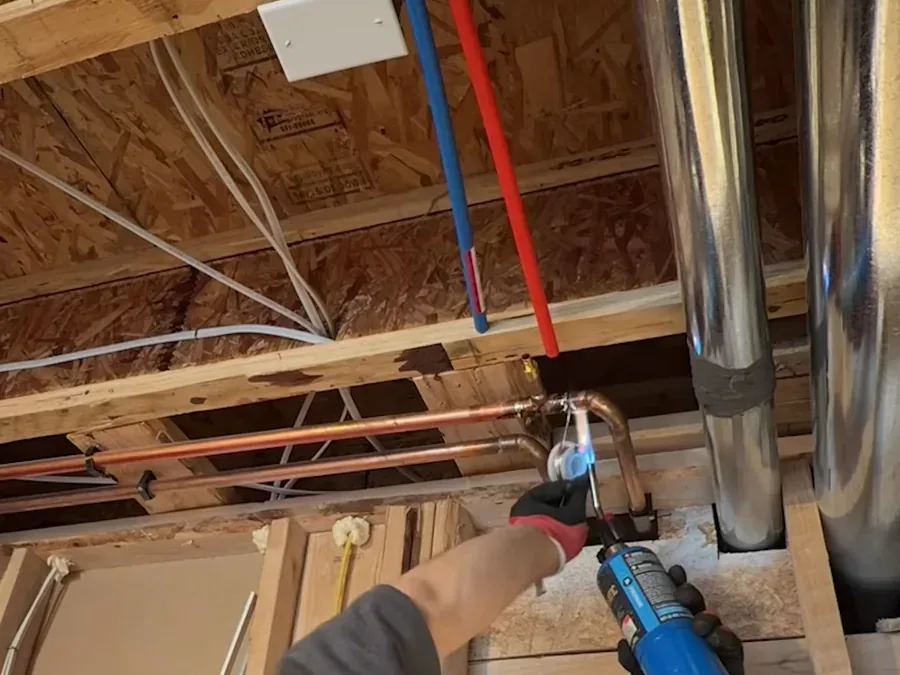
Repair or repipe? What repeat leaks tell you
One leak in a sound line is a repair. Two or three in the same line within a couple of years, pinhole leaks in several places, water that comes out discolored or pressure that drops are the pattern that points to the pipe itself, not a single failure. Pipe patching and repair, done leak by leak, keeps each visit small while the total climbs, and a list of recent pipe repairs with dates shows whether a pattern exists. A repipe replaces the cause. Leaky pipe repair is the right call for one run, and a plumbing system repiping is the answer for a house of them. Burst and leaking pipes in the same house within a short span count as a pattern.
Repair versus repipe honesty comes down to paper: a written quote for the repair path and a written quote for the repipe, with the number of leaks so far on the table. Ask the plumber to say where each leak was and how old the pipe is, and not to recommend a repipe from one leak.
Signs the pipe itself is wearing out:
- Pinhole leaks in more than one place, or a second leak in the same run
- Rust-colored or metallic-tasting water when a tap first opens
- Low pressure that has crept down at several fixtures
- Green or white crust at copper joints, or flaking at galvanized fittings
- Wet spots in walls or ceilings that return after a repair
Copper pipe repair and when copper has run its course
Copper is durable, but it pits from the inside in some water conditions and develops pinholes. A single pinhole is a repair with a coupling or a short replacement section. Several pinholes in a run, green staining at joints or a pattern of leaks in a bathroom group suggest the line is thinning. Pipe break repair on copper is straightforward when access is easy and costly when the line runs through finished walls.
Pinhole leaks are small, and they can run for months behind a wall before a stain or a bill gives them away. The leak detection page covers finding one.
Whole-house repiping: what the job covers
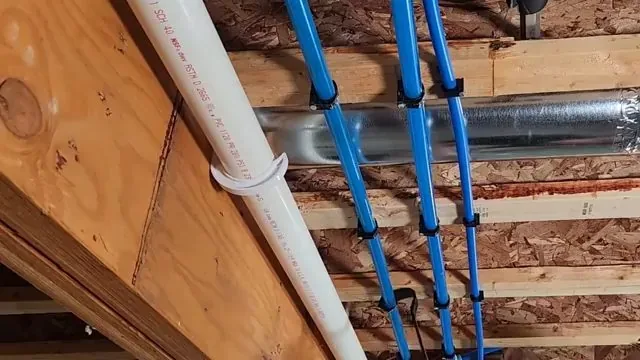
Plumbing system repiping, the whole-house kind, replaces the supply lines from the water main entry to each fixture, usually with new copper or PEX. The plumber opens walls and ceilings at selected points, runs new lines, reconnects fixtures and the water heater, and patches the openings. The old lines are usually abandoned in the wall or removed where access is easy.
The scope should be in writing: how many fixtures, which lines, where openings will be, who patches the drywall and who paints. Staging matters in an occupied house, because the water is off for part of each day while connections are made. Ask for a plan that keeps at least one bathroom usable where possible, and for condo or apartment work, ask whether an HOA or building manager needs notice.
A pipe has burst: what to do right now
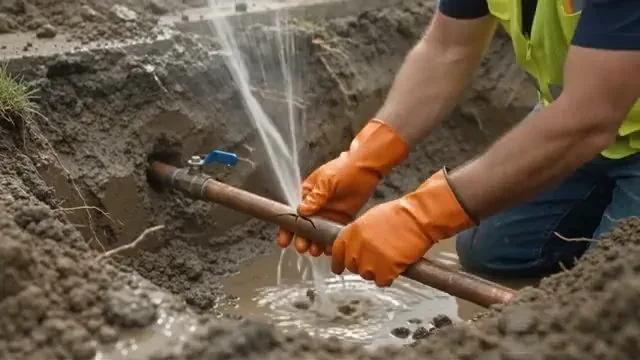
A burst pipe is an emergency, and the first ninety seconds matter more than the call that follows. Close the main water valve, open a faucet at the lowest point to drain the line, turn off the power to any room where water is near outlets, and move valuables out of the path. Then call.
Phone the dispatch line, which never closes; the plumber assigned gives the arrival estimate. For water that has already soaked the house, water damage restoration handles drying and cleanup.
What the pipe is: ask the plumber to identify it before quoting
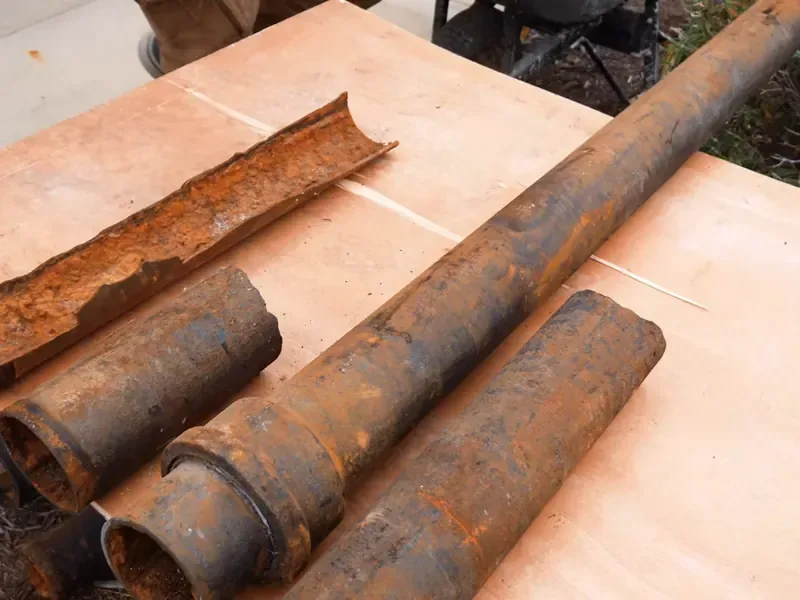
Material decides the repair. Galvanized steel corrodes from the inside, narrows over time and causes low pressure and brown water. Copper pits and develops pinholes. PEX is flexible plastic that resists corrosion and is a common choice for repipes. CPVC and PVC are rigid plastic used in supply and drain lines. Cast iron appears on older drain lines. Polybutylene, a gray plastic used in some homes decades ago, is known for failing at fittings and is usually replaced when found.
Under-slab and underground lines are a special case, since they cannot be seen. Detection comes first, and the slab leak page covers it.
Pipe replacement scope: walls, attic, slab and what gets patched
Access sets the effort. Lines in an attic or crawlspace are easy to reach. Lines in a finished wall mean cuts in drywall. Lines under a slab are the hardest, and they are often rerouted through the walls instead. A good scope names each of these and says who restores the openings. Plumbers repair pipe and close the opening, and finish work such as texture and paint is often a separate line.
| Where the pipe runs | Typical approach | What to ask |
|---|---|---|
| Attic or crawlspace | Replace in place with new lines | Whether insulation is restored |
| Inside finished walls | Small openings at fixtures and corners | Who patches and paints |
| Under a concrete slab | Reroute through walls or attic, abandon the old line | Whether the old line is capped |
| Underground yard line | Trench, or replace with a pulled-in new line | The locate ticket and surface restoration |
| Condo or apartment | Per unit, coordinated with the building | Notice rules and shared shutoffs |
Permit and inspection for replacing concealed pipe
Pipe replacement is permit work, not a casual repair.
Other pipe questions
What about cast iron, PVC and CPVC?
Cast iron is mostly found in older drain lines and fails by scaling and cracking. PVC is common for drains and vents. CPVC carries hot and cold supply in some homes. A plumber identifies each at an opening and says whether it is sound.
Is emergency or same-day repiping possible?
A burst or failed line can be repaired the same day if the plumber can reach it. A whole-house repipe is planned work with a scope and a permit, not a same-day job.
How long does a repipe disrupt the house?
It depends on the size of the house and the access. The plumber should explain how water is shut off during the work and how openings are closed each day.
Pipe replacement questions
How do I repair a cracked or broken pipe?
Shut the water at the main, drain the line and call. A plumber replaces the damaged section with a coupling or new pipe. A repeat crack in the same line calls for a closer look at the pipe.
What should I do if a pipe bursts?
Close the main valve, open the lowest faucet, keep clear of electrical hazards and call. Photograph the damage for any insurance claim before cleanup.
Can an under-slab or underground pipe be repaired without repiping?
Sometimes. Detection finds the leak, and a spot repair or a reroute may fix it. A pattern of leaks points toward replacing the line.
How long does a repipe take or last?
The job is days, not hours, in most houses, and the new pipe is chosen to last for decades. The plumber should give the schedule after seeing the access.
Do galvanized pipes need to be replaced?
Galvanized pipe corrodes inside, restricts flow and causes discolored water. Most galvanized supply lines are replaced when the symptoms show up.
Services that connect to pipe replacement
Pipe burst or leaks that keep returning?
Close the main, then phone. The dispatcher notes where the water is and finds a plumber to take the job.
Call (818) 280-4874