
Emergency Sewer Line Repair and Replacement in Burbank
Sewage in a shower drain, toilets that gurgle when the washer drains, a wet spot in the yard that smells: these are the calls that come in about a sewer line. When you phone the dispatch line, the dispatcher asks which fixtures are backing up, whether the lowest drain in the house is affected, whether a cleanout is reachable and whether wastewater is entering the building. Our dispatch line passes those answers to the plumber serving Burbank who takes the job, so the right equipment arrives.
Call (818) 280-4874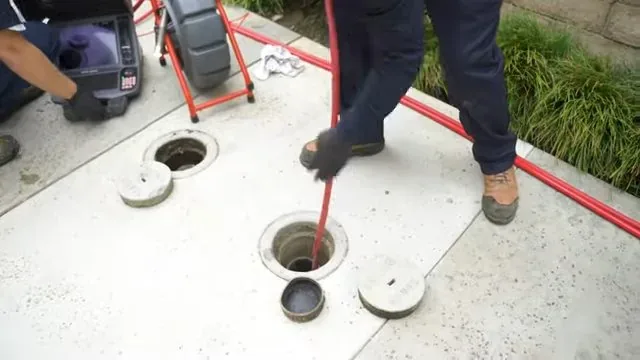
Sewer lateral in Burbank: homeowner side and City side
The first decision comes before any digging: is the problem in your lateral or in the City main? The lateral is the pipe that runs from the building to the sewer main. The main runs under the street. Who fixes it, and who pays, depends on which one is blocked or broken.
These signs usually point at the lateral rather than the main:
- Only your building is affected while neighbors report no problems
- The lowest fixture in the building overflows first, often a floor drain or a tub
- Gurgling in a toilet or tub when another fixture drains
- Repeated clogs in the same line after cleaning
- A wet, sunken or foul-smelling patch of yard over the line
- A cleanout that fills with water or shows paper and waste standing in it
If several neighbors report backups at the same time, the main is the likely cause, and the report goes to Public Works. If only your house is affected, the lateral is the first suspect. Ask the plumber to tell you which one the camera found.
Camera inspection in Burbank: what to ask to see
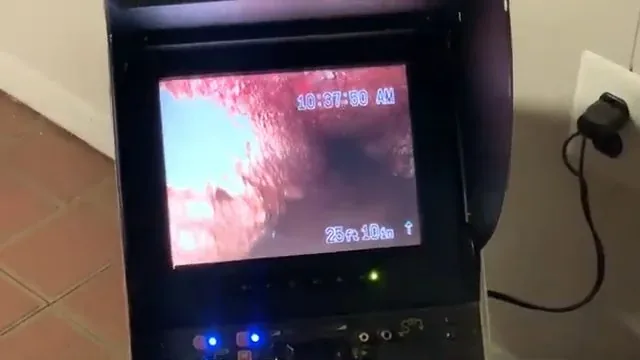
A sewer camera inspection, often called a scope, is the step that turns a guess into a finding. A small camera on a flexible cable travels the lateral from a cleanout and records the pipe condition, the connection to the main and any blockage. The plumber should also mark the depth and location of problems on the surface using a locator, since an unmarked finding is hard to dig toward.
Ask for the recording or stills and for a plain statement of what each frame shows: roots, a cracked section, an offset joint, a belly that holds water, a collapsed run. For a home sale, a scope also tells a buyer or seller what the pipe looks like before closing. Ask for the report in writing.
Does sewer cleaning fix a backup, or only relieve it?
A mainline clog is the usual reason for a cleaning call. Sewer cleaning, also called rooter service, uses a cable machine or a hydro jet through the cleanout to clear the lateral. It relieves most blockages, including roots and grease. It does not repair a cracked or offset pipe. If the lateral clogs again soon after cleaning, the cause is probably in the pipe, and the camera finding decides what comes next.
Cleaning ahead of a camera is common and sensible when sewage is already coming up in the house. The plumber stops the backup first, then runs the camera and reports what the pipe looks like. For the broader set of drain clogs inside the house, the drain cleaning page covers the cable, auger and jetting methods in detail.
Sewer line repair: what happens after the camera finding?
Sewer system repair starts from the camera finding, not the other way around. The table below pairs common findings with the usual approach and the main thing to weigh.
| Camera finding | Usual approach | What to weigh |
|---|---|---|
| Roots at a joint, pipe otherwise sound | Cut the roots, clean the line and plan periodic cleaning | Roots return unless the joint is sealed or replaced |
| One cracked or offset section | Spot repair of the damaged length | Whether neighboring sections are close to failing |
| Long run of cracks, scale or sagging | Lining or replacement of the run | Access, depth, landscaping and the length of the failed section |
| Collapsed pipe | Excavation and replacement of the collapsed section | Permits, a locate ticket and surface restoration |
| Belly holding water | Replacement of the sagging section | Whether the low point causes repeated stoppages |
Ask the plumber to explain why the chosen approach beats the alternatives for your pipe, and to quote the alternative as well. Findings that point to a short repair rarely justify a long replacement, and the reverse is also true.
Sewer replacement when the line is cracked, offset or sagging
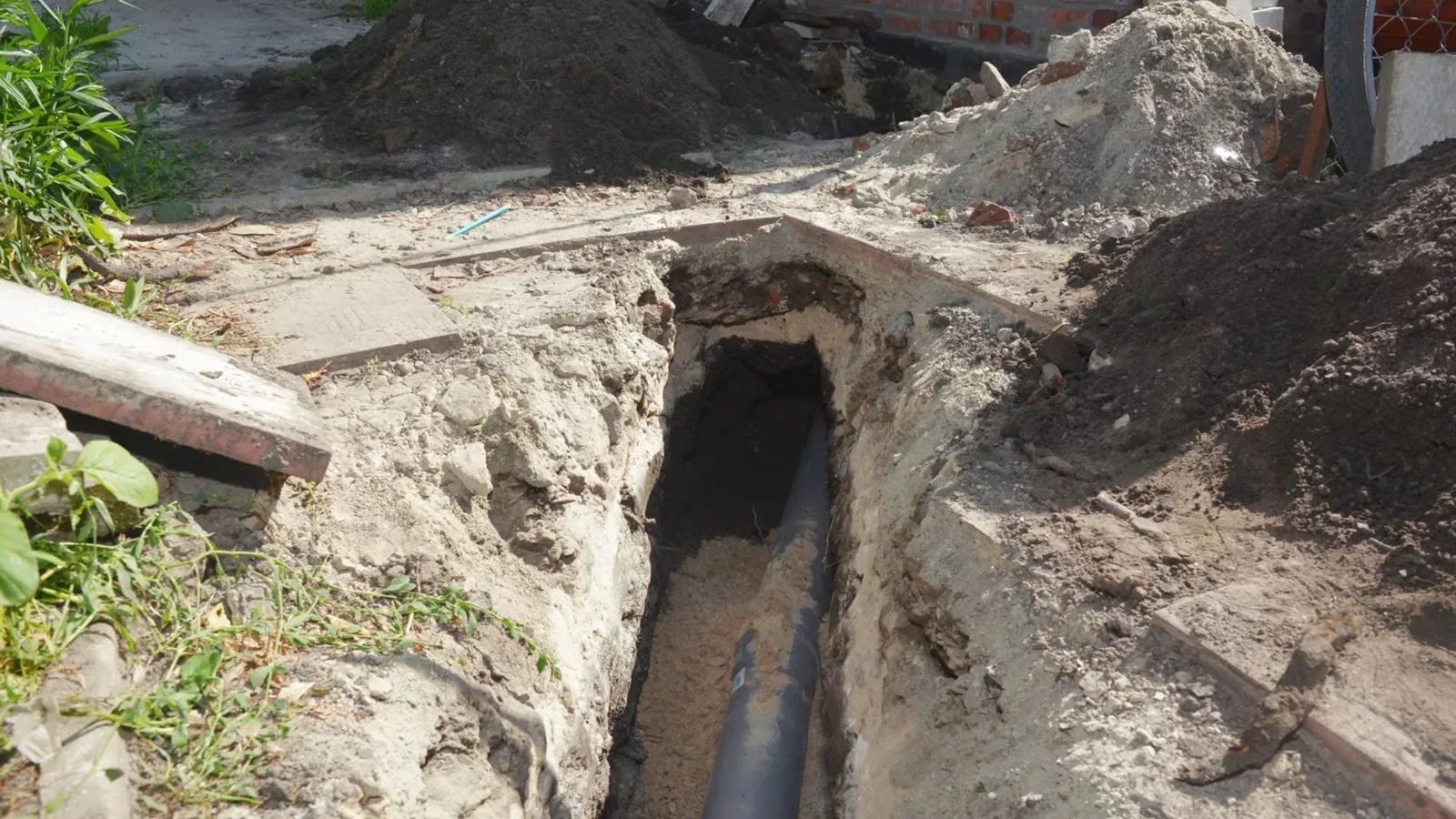
Replacement is for pipe that cannot be saved. Older lines made of clay, cast iron or a fiber material called Orangeburg are the usual ones to fail, and a camera shows scale, cracks, flaking or a flattened shape. Replacement can mean trenching along the old path, boring a new path, or pulling a new pipe through the old one.
Each path has a different footprint. Open trenching is the most direct and the most disruptive to yards, driveways and landscaping. Trenchless methods, covered in the next section, reduce the digging. Before the work begins, ask for a clear scope: where the new pipe starts and ends, how the connection at the main will be made and how the surface will be restored.
Trenchless versus open trench: is lining or pipe bursting an option?
Trenchless methods repair or replace a sewer lateral with far less digging. Lining pulls a resin-coated liner into the existing pipe and cures it into a new pipe inside the old one. Pipe bursting pulls a new pipe through the old path while breaking the old one apart. Both usually need only small access pits at either end.
Neither suits every line. Lining needs a pipe that is open and reasonably aligned, and bursting needs space for the pit and soil that allows the new pipe to pass. A camera finding, the depth of the pipe and the layout of the yard decide it. Ask the plumber why trenchless does or does not fit your lateral, and whether the proposal includes a camera check afterward.
Permits and 811 before anyone digs
Sewer work involves two sets of rules: permits for the work and a utility locate before excavation.
Who else to call besides a plumber
Public Works is the right call for a sewer main overflow or a blockage in the street. A plumber is the right call for the lateral and the building plumbing. A sewage backup that has soaked floors and walls brings in a third group: water damage restoration handles the drying and cleanup, and the same dispatch line can arrange it.
When a sewer backup is an emergency
Wastewater entering the house, a floor drain overflowing or toilets and tubs backing up together are emergencies. Stop all water use, including the washer and dishwasher, and call. The dispatch line answers day and night; how soon a plumber arrives depends on who is closest, so no time is quoted on the call.
Sewer details that come up
What is a cleanout and why does it matter?
A cleanout is a capped pipe, usually outside the house, that gives direct access to the lateral. It lets a plumber clear or camera the line without removing a toilet. If a house lacks one, adding it is often the first step in sewer work.
Why does the yard or house smell like sewage?
A sewer smell can come from a dry trap, a failed seal at a toilet, a vent problem, a floor drain without water in it or a cracked lateral. A plumber narrows the cause with a smoke or water test and a camera.
What pipe materials fail most often?
Clay, cast iron and fiber pipe are the older materials that tend to crack, corrode or deform. Newer plastic pipe fails more often at joints and from improper slope. The camera finding says what you have.
Sewer line questions before the camera goes in
Should I get a sewer lateral inspection before selling or buying a home?
A scope shows the lateral's condition before closing, which helps both sides negotiate with facts. Ask for the recording and a written summary, and keep it with the sale paperwork.
What is a sewer cleanout, and where do I find mine?
Cleanouts are capped access pipes, often near the house or at the property line. Do not open one while sewage is backing up, since pressure can push water out. Call a plumber first.
Who do I call for a clogged sewer line?
For a clog in your own lateral or building drains, call a plumber. For a main in the street, or when several neighbors are affected, report it to Public Works.
How is a sewer lateral replaced without digging up the yard?
Trenchless methods pull a liner or a new pipe through the old path, using small access pits. Whether it works depends on the pipe's condition, depth and alignment, which the camera shows.
Why does my house smell like a sewer?
A dry trap, a bad seal, a vent problem or a cracked lateral can cause it. Running water in rarely used drains is a quick test; a lingering smell needs a plumber.
How do I know I need sewer line repair and not just cleaning?
Clogs that return soon after cleaning, a camera showing cracks or offsets, or damp soil over the line point to repair. A clean camera view of an intact pipe points to cleaning alone.
Services that follow a sewer problem
Sewage coming up in the house?
Stop using water, then phone. The dispatcher records what is backing up and assigns a plumber serving Burbank who can scope the lateral.
Call (818) 280-4874