
Commercial Plumbing Service for Burbank Businesses and Buildings
A common assumption is that commercial plumbing is the same as residential plumbing, only bigger. In practice the differences show up fast: more fixtures on the same line, grease from a kitchen, tenants and a landlord who each own a piece of the problem, and a building that has to keep running while the work is done. This page covers the light commercial and multifamily work a plumber handles, who calls whom, and how after-hours calls and permits work.
Call (818) 280-4874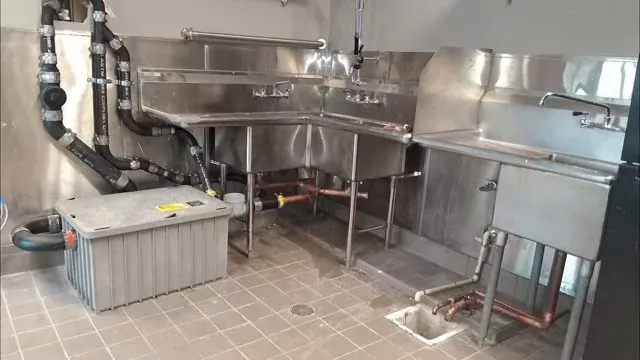
Light commercial and multifamily: what is in scope
The work here is light commercial and multifamily: restaurants and commercial kitchens, offices, retail suites, apartment buildings and small light-industrial or cold-storage spaces. It covers drain cleaning, water heaters, leak detection, pipe, slab and sewer repair and fixture work. Large industrial process piping and heavy industrial systems are outside this scope, and a plumber will say so on the first call.
Matching the call to the job saves time. Describe the building type, the number of units or fixtures involved, the symptoms and whether the problem is in one suite or the whole building.
Landlord, tenant or owner: who calls and who pays
In a leased space the first question is whose pipe it is. Fixtures inside a suite are usually the tenant's concern, while shared lines, risers and the building sewer are usually the landlord's, but the lease sets it. Call the property manager when a shared line is involved, and ask for written authorization before a plumber starts work in a space you do not own.
A plumber needs three things from the caller: the address and suite, the name of someone who can authorize the work and a contact on site for access. Ask who will be billed before the visit, so the invoice does not stall.
After-hours leak or backup in an occupied building
Commercial problems rarely wait for business hours. A backup in a restaurant at dinner service, a leak above a server room or a broken line in an apartment building at night all need a response. Phone the dispatch line at any hour; someone answers day and night, and the dispatcher will not quote an arrival time because the nearest available plumber sets it.
While you wait, close the nearest shutoff, move equipment and inventory out of the way and keep people clear of wet floors. In a multifamily building, notify the manager so adjacent units can be checked for water.
Grease traps, kitchen drains and camera work
A commercial kitchen sends grease, starch and food solids into its drains all day. A grease trap or interceptor catches the grease, and it must be cleaned on a schedule or it backs up into the kitchen. Drain lines clog faster in restaurants than in homes, and hydro jetting clears buildup that a cable leaves behind.
A camera inspection shows whether a recurring clog is grease, a damaged pipe or roots, and it records the condition of the line for the owner. Ask for the recording after any recurring problem. The drain cleaning page covers the tools in more detail.
| Problem in the building | Usually handled by | First call |
|---|---|---|
| Fixture or drain inside one suite | Tenant, under most leases | Dispatch line, with manager informed |
| Shared drain, riser or stack | Landlord or association | Property manager, then dispatch line |
| Building sewer lateral | Owner of the building | Dispatch line for a camera look |
| Grease trap or interceptor | Kitchen operator | Scheduled service or dispatch line |
| Central water heater | Owner or association | Dispatch line |
Water heaters for businesses and multifamily buildings
A business water heater is sized for peak demand in a kitchen, a salon or a locker room, not for a family. Multifamily buildings use central water heaters or individual units, and each has different repair and replacement paths. A failed central unit leaves every unit without hot water at once, so the call is urgent.
Water heater work for a business follows the same permit and bracing rules as a home. The water heater installation page explains what a replacement involves, and a plumber confirms size and fuel for the building.
Pipe, slab and sewer repair in larger buildings
A burst pipe, a slab leak or a sewer problem in a commercial building follows the same detection and repair logic as in a house, with more at stake. Leak detection narrows the location before walls or floors are opened, and sewer camera work finds the failing section of a building lateral. Multifamily buildings add shared risers and stacks, where a leak can affect several units.
Detection comes first. The slab leak and sewer line pages explain the methods, and a plumber adapts them to the building. Industrial sewer work beyond light commercial scale is a different job.
Permits and inspections for tenant improvements
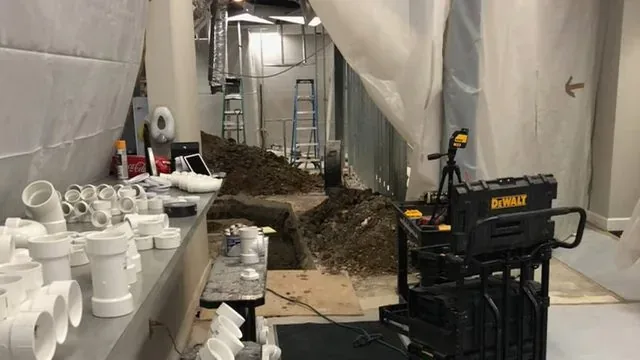
Tenant improvements that move or add plumbing fixtures are permit work, and bigger projects go through plan check instead of the counter.
Maintenance contracts and planned service
Planned service replaces emergency calls with scheduled visits: drain cleaning on a cycle, grease trap pumping, water heater flushes and valve checks. A contract suits a restaurant or an apartment building where the same problems recur. Ask what is covered, how often visits happen and what a call outside the schedule involves.
A contract should be in writing, with a stated scope and a way to end it. Be wary of a contract that promises results it cannot control. Commercial plumbing contractors and commercial plumbing companies differ in how they staff after-hours calls, so ask that directly.
Records to ask for after a call
- A written description of what was found and where, with photographs
- Camera recordings for any drain or sewer work
- What was repaired or replaced and the permit status
- The plumber's contact for follow-up questions
- An invoice that lists labor and materials separately
For a leased space, send a copy to the landlord or manager. For a restaurant, keep the grease trap service record with the health inspection file.
Commercial plumbing questions
Do you work on multifamily buildings and apartments?
Yes, light multifamily work is in scope: shared drains, risers, central water heaters and unit-level leaks. Describe the building and the number of units when you call.
Is leak detection available for a commercial space?
Yes. Detection tools work the same way in a larger building, with more attention to shared lines and the path of water between units.
Commercial water treatment: softeners, RO and filtration
A commercial water softener, a commercial RO system, office water filtration and ice machine filtration service are water treatment jobs sized to the building. The water softener page explains the equipment and what to ask.
What is considered industrial and out of scope?
Heavy process piping, large industrial systems and specialty plumbing in production facilities are outside light commercial work. The plumber will say so on the first call.
Commercial plumbing questions from owners and managers
Do you offer emergency commercial plumbing?
Someone answers the phone at all hours and passes the job to a plumber in the network. No arrival time is quoted on the phone.
Who handles a clogged drain in a leased restaurant space?
The lease decides, but kitchen drains inside the suite usually fall to the tenant and the building sewer to the landlord. Call the manager if a shared line is involved.
How often should a grease trap be cleaned?
The schedule depends on the trap size and kitchen volume, and the local requirements. Many kitchens clean on a fixed cycle, and a trap that smells or backs up is overdue.
Do commercial plumbing jobs need a permit?
Fixture and water heater work generally does, and larger tenant improvements go through plan check. The plumber confirms the path with the City.
Services commonly booked for buildings
Backup or leak in an occupied building?
Give the suite, the symptom and the name of someone who can authorize work, and the dispatcher passes it along at any hour.
Call (818) 280-4874